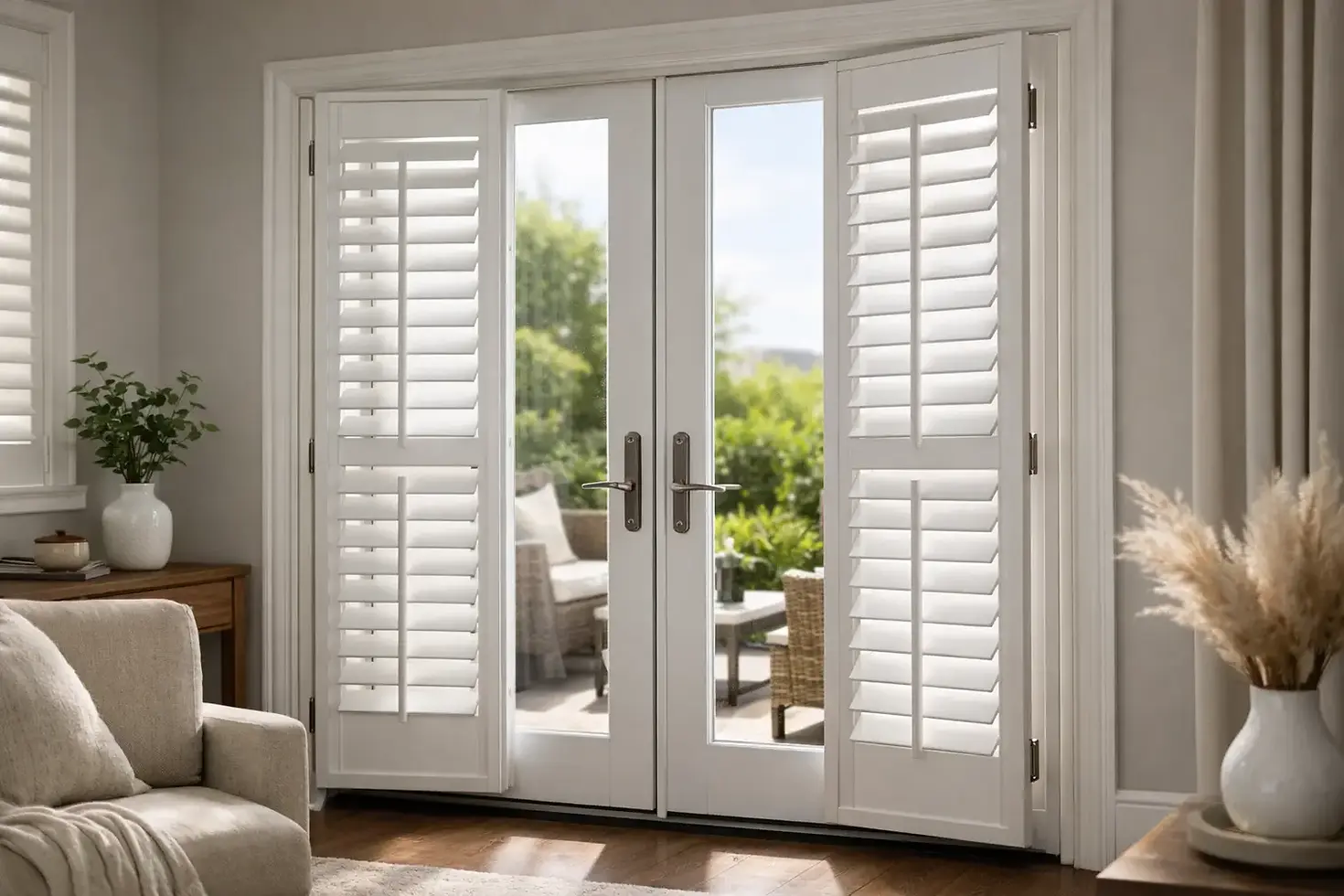
Guide to Shutters for French Doors at Home
- Steve Chisholm

- 7 days ago
- 6 min read
French doors earn their place in a home by bringing in generous daylight and opening a room towards the garden. They can also leave you feeling exposed after dark, particularly where a kitchen, lounge or bedroom faces neighbouring properties. This guide to shutters for French doors explains how to keep the character of the doors while gaining dependable privacy, flexible light control and a smarter finished look.
Why shutters work so well on French doors
Curtains can look heavy around French doors and may need pulling fully aside before the doors can be opened. Blinds can offer a lighter alternative, but their cords, brackets and raised fabric are not always practical on doors used every day. Shutters are fitted to the doors themselves, so the panels move when the doors move.
That makes them a particularly tidy choice for garden rooms, kitchens and dining areas. Open the shutter panels with the doors when you want direct access outside, or leave the panels closed and adjust the louvres to soften glare without shutting out the day.
They also create a more considered, built-in appearance. Made-to-measure shutters follow the proportions of your doors, rather than looking like an added window covering. For homes where the doors are a focal point, that detail makes a real difference.
Guide to shutters for French doors: start with the doors
The best shutter design begins with a proper assessment of how your French doors open and how they are used. Door-mounted shutters are usually the right solution because each shutter panel is fixed to, and opens with, its corresponding door. There is no need to take anything down before stepping into the garden.
A specialist will measure more than the glass. The handle position, hinges, locking points, frame depth, opening direction and available clearance all matter. French doors are not always identical, especially in period properties or where replacement doors have been fitted over time. Made-to-measure work avoids uneven gaps, panels catching on handles, or an awkward fit around the frame.
Handle clearance deserves particular attention. Depending on the style of handle and the available space, shutters may need carefully shaped cut-outs or a configuration designed around it. This is one reason a professional survey is worth having rather than ordering solely from rough measurements.
Choose a panel style that suits everyday use
For most French doors, full-height shutters are the natural option. Each panel covers the full glazed area and opens on hinges, giving clear access when needed. The louvres can be tilted independently from the panel opening, so you retain day-to-day control over light and privacy.
The detail within a full-height design can be tailored. A mid-rail divides the shutter into upper and lower sections, allowing the louvres above and below it to move separately. It is useful where you want privacy at eye level but still want the upper louvres open for daylight. It can also align neatly with a horizontal rail in the doors for a balanced appearance.
If the doors lead onto a busy patio or are opened constantly during warmer months, consider how many panels will be folded back and where they will sit. Wider panels can mean fewer hinges and a cleaner look, while narrower panels can be easier to manage on larger openings. Neither is automatically better - the practical choice depends on the door width, room layout and frequency of use.
Think carefully about louvre size
Louvre size affects both the appearance and the view. Larger louvres have a more open, contemporary feel and allow a broader view through when tilted. Smaller louvres can suit more traditional interiors and may give finer control over light.
For French doors, many homeowners prefer a medium or larger louvre because it complements the scale of the glass and avoids making the doors look overly busy. However, the best choice is the one that suits your room, your privacy needs and the style of the property.
A concealed tilt mechanism offers a cleaner, more streamlined finish, while a visible tilt rod gives a more classic shutter look. Both work well. This is largely a matter of personal preference, although a concealed option can be easier to wipe down in high-use family spaces.
Privacy and light control without losing the view
French doors can create a difficult balance: you want the garden-facing view during the day but do not want a room on display at night. Shutters give you more options than a simple open-or-closed covering.
With the panels shut, angling the louvres upwards directs light towards the ceiling while limiting direct sightlines into the room. In a south-facing room, this can reduce harsh sunshine and screen glare without making the space feel dark. In the evening, close the louvres more tightly for privacy.
For bedrooms or ground-floor rooms facing a pavement, a split louvre arrangement or mid-rail can be especially useful. The lower section can remain closed while the upper section stays open for natural light. It is a practical solution that still feels light and welcoming.
Shutters can improve the sense of comfort near glazing, but they are not a replacement for insulated doors or quality double glazing. Likewise, they provide visual privacy but should not be treated as a security measure. Their value lies in everyday control, appearance and durability.
Material matters, especially near doors and gardens
The right shutter material should reflect the room and the demands placed on it. French doors near a garden can be exposed to condensation, muddy hands, pets and frequent cleaning, particularly in kitchens, utility rooms and family spaces.
PVC shutters are an excellent choice where moisture resistance and low maintenance are priorities. They are durable, easy to clean and well suited to hardworking areas where painted timber may need more care over time. A simple wipe with a soft damp cloth is usually enough to keep them looking fresh.
Wooden shutters offer a different character and can be a strong choice for formal lounges, bedrooms and properties where a natural finish or a lighter panel is preferred. The trade-off is that material selection should account for humidity and how exposed the doors are to daily wear.
Colour also changes the effect. White and soft neutral shutters keep the look bright and timeless, working well with most door frames. Darker tones can add definition and suit bolder interiors, but they tend to create more contrast against the glass. A survey gives you the chance to view samples in the actual light of your room rather than deciding from a screen.
Fitting details that make the finish look right
A good installation is about more than panels that open and close. The shutters should sit neatly against the door frames, operate without rubbing, and leave handles and locking mechanisms fully usable. Panels need to be aligned so the sightlines look even when the doors are closed.
Professional fitting is particularly valuable on older homes across the North East, where walls, frames and doors may not be perfectly square. An experienced installer can allow for small variations and make sure the finished shutters look intentional rather than compromised.
Before fitting day, clear nearby furniture and make sure the doors can be opened fully. It is also helpful to mention any alarm sensors, door restrictors or unusual handles during the survey. Small details raised early are far easier to accommodate in the design.
Common questions about shutters for French doors
Can I still open my French doors fully?
Yes. When shutters are correctly designed as door-mounted panels, they open with the French doors. The shutter panels can also be folded back when you want the glazing completely clear.
Will shutters block too much daylight?
Not when used properly. Tilting the louvres lets you filter or direct daylight rather than simply covering the glass. Larger louvres can be particularly effective where you want a more open view.
Are shutters suitable for doors with handles?
Yes, although the handle type and location must be measured accurately. The shutter design can be planned with the right clearance or cut-out so the handle remains easy to use.
How should French door shutters be cleaned?
Dust the louvres regularly with a soft cloth or duster, then wipe PVC shutters with a lightly damp cloth when needed. Avoid abrasive cleaners, as these can mark the finish.
French doors should make your room feel more open, not more exposed. A carefully measured shutter design gives you the freedom to enjoy the light, use the doors easily and settle in for the evening with the privacy you want. For homeowners looking for a tailored, professionally fitted finish, Superior Interior Shutters can help turn that balance into a practical part of everyday living.


Comments